



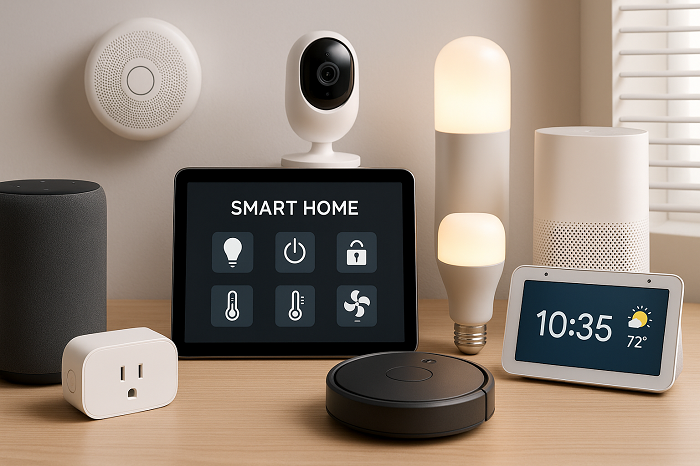
In 2025, the concept of a “smart home” is no longer futuristic — it’s becoming an everyday reality. Homes are transforming into intelligent ecosystems that understand preferences, enhance comfort, and improve efficiency. With new innovations powered by artificial intelligence, voice control, and automation, the latest smart home devices are redefining how we live, work, and relax. Whether you are a tech enthusiast or someone looking to simplify daily routines, the right smart gadgets can turn any house into a fully connected living space. Let’s explore the top 10 smart home devices you’ll absolutely want in 2025, and how each can make your life smarter, safer, and more convenient.
1. AI-Powered Smart Assistants
In 2025, smart assistants like Alexa, Google Assistant, and Apple’s Siri have evolved far beyond voice commands. These new-generation AI companions are now capable of anticipating user needs by learning behavioral patterns, adjusting routines automatically, and even communicating seamlessly with other devices in the house. They can suggest recipes based on the ingredients you have, adjust the lighting to match your mood, and even handle security monitoring. Smart assistants are no longer just reactive—they’re proactive partners in managing your home environment.
2. Smart Thermostats with Predictive Climate Control
Gone are the days when thermostats only adjusted the temperature manually. The latest smart thermostats of 2025 use artificial intelligence and machine learning to predict when you’ll be home, how you prefer your temperature, and even how to reduce your energy bills. They analyze weather forecasts and energy consumption data to optimize heating and cooling, maintaining comfort while minimizing costs. Integrated with voice assistants, these thermostats ensure your home always feels perfect, whether it’s a chilly morning or a hot afternoon.
3. Intelligent Security Systems with Facial Recognition
Home security in 2025 has become both smarter and more personalized. The newest systems use facial recognition, motion tracking, and real-time cloud monitoring to provide enhanced protection. Unlike older models, these systems differentiate between family members, guests, and strangers. They can alert you instantly through your smartphone if unusual activity is detected, and some even allow remote communication with visitors. With advanced encryption and AI-driven monitoring, your home stays secure while maintaining privacy and control in your hands.
4. Smart Lighting that Adapts to Your Mood
Lighting technology has seen a massive transformation, with smart lighting systems becoming essential in modern homes. These intelligent lights automatically adjust brightness, color temperature, and tone to suit your mood or activity. Imagine waking up to soft daylight hues, working in bright white light, and relaxing in warm, cozy tones during the evening—all without touching a switch. Controlled through mobile apps or voice commands, these lights even integrate with music or movies to create immersive experiences.
5. Next-Generation Smart Refrigerators
The smart refrigerators of 2025 are true culinary assistants. Equipped with internal cameras, touchscreens, and inventory-tracking AI, they can suggest recipes based on available ingredients and automatically order groceries when you’re running low. Some even monitor expiration dates and recommend healthy meal plans. Integration with voice assistants makes them easy to use, and their energy-efficient designs align with eco-friendly living trends. These fridges are not just appliances—they are personal kitchen managers that keep your diet and budget in check.
6. Smart Mirrors with Health Monitoring
One of the most exciting additions to the modern home is the AI-powered smart mirror. Far from being a simple reflection, these mirrors double as personal health monitors. They can track vital signs, analyze your skin health, and display fitness metrics or daily schedules. For example, while brushing your teeth, you can view weather updates, reminders, or wellness data. The health-focused technology behind these devices helps you stay informed and proactive about your physical well-being, making them a must-have in 2025 smart homes.
7. Robotic Vacuum Cleaners and Mopping Bots
Cleaning has never been more effortless. Robotic vacuum cleaners in 2025 are smarter, quieter, and more efficient than ever. They use LiDAR mapping and obstacle detection to navigate around furniture while simultaneously vacuuming and mopping floors. Some models even self-empty their dustbins and automatically return to charging docks. With integration into smart home ecosystems, you can schedule cleanings, monitor progress remotely, and enjoy spotless floors without lifting a finger.
8. Smart Air Purifiers with Real-Time Pollution Detection
As air quality continues to be a major health concern, smart air purifiers are becoming essential home gadgets. The new generation of purifiers in 2025 doesn’t just clean the air—it analyzes it. Equipped with sensors that detect allergens, pollutants, and humidity levels, these devices provide real-time updates through mobile apps. They adjust purification intensity automatically and can integrate with other systems like HVAC or humidifiers to maintain a balanced indoor environment. For urban dwellers, these devices are crucial for creating a healthier home atmosphere.
9. Automated Smart Curtains and Windows
Imagine waking up to natural sunlight without moving a muscle. Smart curtains and windows are making this possible by automating light and privacy control. These systems can open or close based on time, weather, or voice commands. They can even detect indoor temperature and sunlight intensity to help regulate energy efficiency. In combination with smart lighting, they enhance comfort while reducing energy use—perfect for eco-conscious homeowners who love convenience and style.
10. Smart Home Hubs for Unified Control
With so many connected devices, managing them can become complex. That’s where smart home hubs come in. These powerful systems unify all your devices—from lighting and locks to speakers and thermostats—into a single, easy-to-use interface. In 2025, hubs have become even more intuitive, offering cross-platform compatibility and advanced automation settings. Whether you prefer using a smartphone, tablet, or voice commands, a smart hub ensures every device in your ecosystem works together seamlessly, providing a smooth, intelligent living experience.
The Future of Smart Living
The smart home revolution in 2025 is about more than just technology—it’s about enhancing lifestyle, sustainability, and convenience. The integration of AI, IoT, and automation is helping homeowners save time, energy, and money while creating safer, healthier spaces. As devices continue to evolve, expect homes to become even more personalized, adaptive, and interconnected. Investing in these smart gadgets today ensures you’re ready for the smarter, greener, and more connected world of tomorrow.
Frequently Asked Questions About Smart Home Devices in 2025
Q1. Are smart home devices expensive to install?
Answer. While high-end devices can be costly, many affordable options now offer advanced features. The key is to start small with essentials like smart bulbs or thermostats and expand your system gradually.
Q2. Do I need Wi-Fi for all smart devices?
Answer. Most smart devices require Wi-Fi or Bluetooth connectivity for remote control and automation. However, newer systems use low-energy mesh networks that improve stability and reduce dependence on Wi-Fi.
Q3. How secure are smart home devices?
Answer. Manufacturers in 2025 are prioritizing cybersecurity. Devices now include encryption, two-factor authentication, and automatic software updates to protect your data and privacy.
Q4. Can I integrate different brands of smart devices?
Answer. Yes, thanks to the rise of universal standards like Matter, devices from different brands now work together more smoothly through common hubs or smart assistants.
Q5. Are smart home devices energy-efficient?
Answer. Absolutely. Most are designed to optimize power consumption and reduce waste, helping homeowners lower electricity bills while supporting eco-friendly living.



Comments are closed